For your teaching toolkit
AP Economics Curriculum Bundle
AP Microeconomics and AP Macroeconomics curriculum bundle with teaching slides, student handouts, answer keys and lesson plans.
$148.50 · One-time digital download
Complete payment through Stripe, then open your resource library from the confirmation page or delivery email. Delivery and refunds.
Need to share or post files? Contact us about your intended use.
Planning your next Economics unit?
See how the materials become a teaching sequence.
Start with the ten-lesson Micro Unit 3 example: choose the next lesson, find the relevant student page and answer key, and plan what to do when a misconception appears.
The free guide includes 45-minute and 90-minute planning examples. These are adaptable schedules, not a promise that every class will finish at the same pace.
Explore the Unit 3 teaching guideInside your download
Two courses, with the lesson files together.
Move from planning a lesson to presenting it, assigning practice and checking the work with matching materials.
- 106 lesson file sets
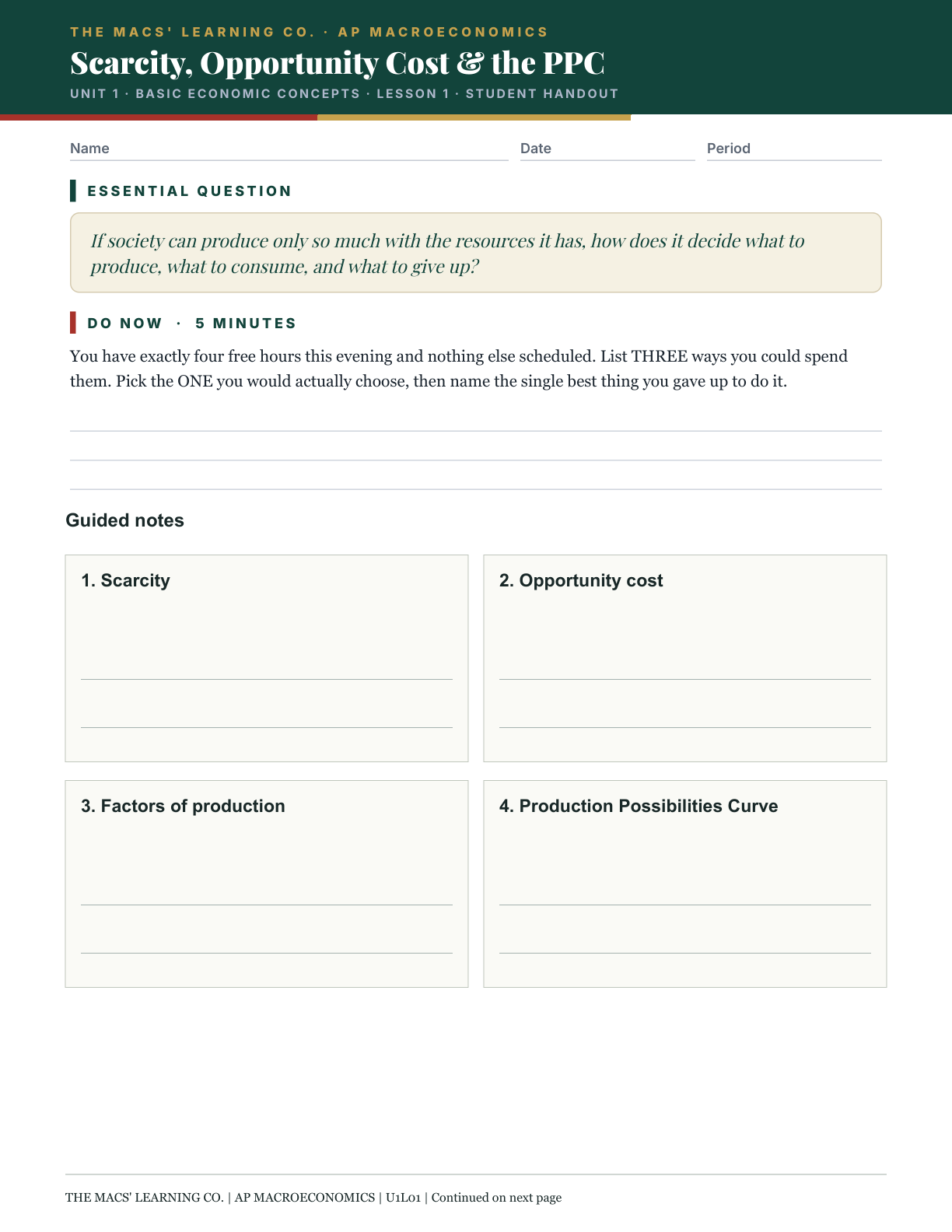
- 52 AP Microeconomics sets and 54 AP Macroeconomics sets, each organized across six units. Lesson numbers group the matching files; the count describes the materials, not a fixed number of class meetings.
- Five files for each lesson
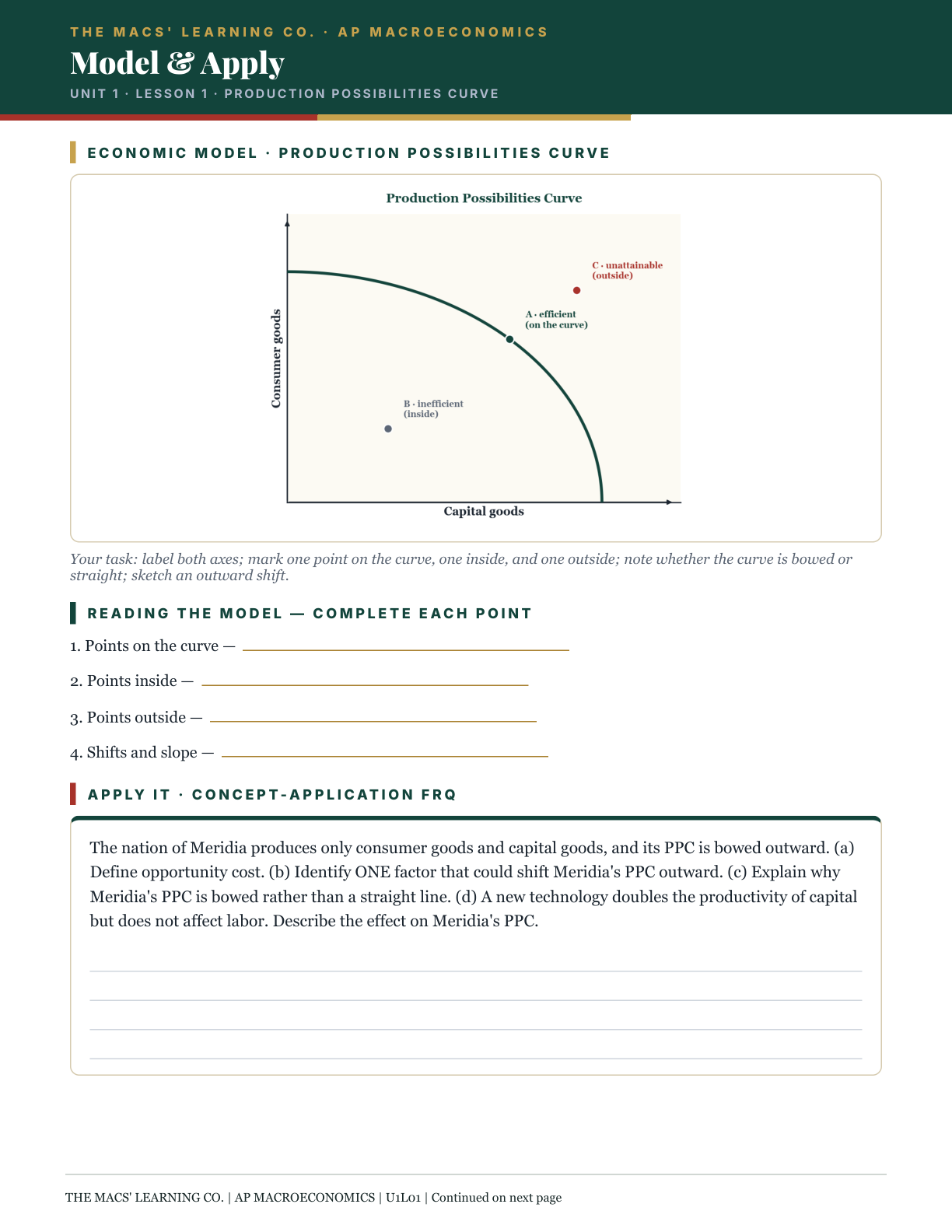
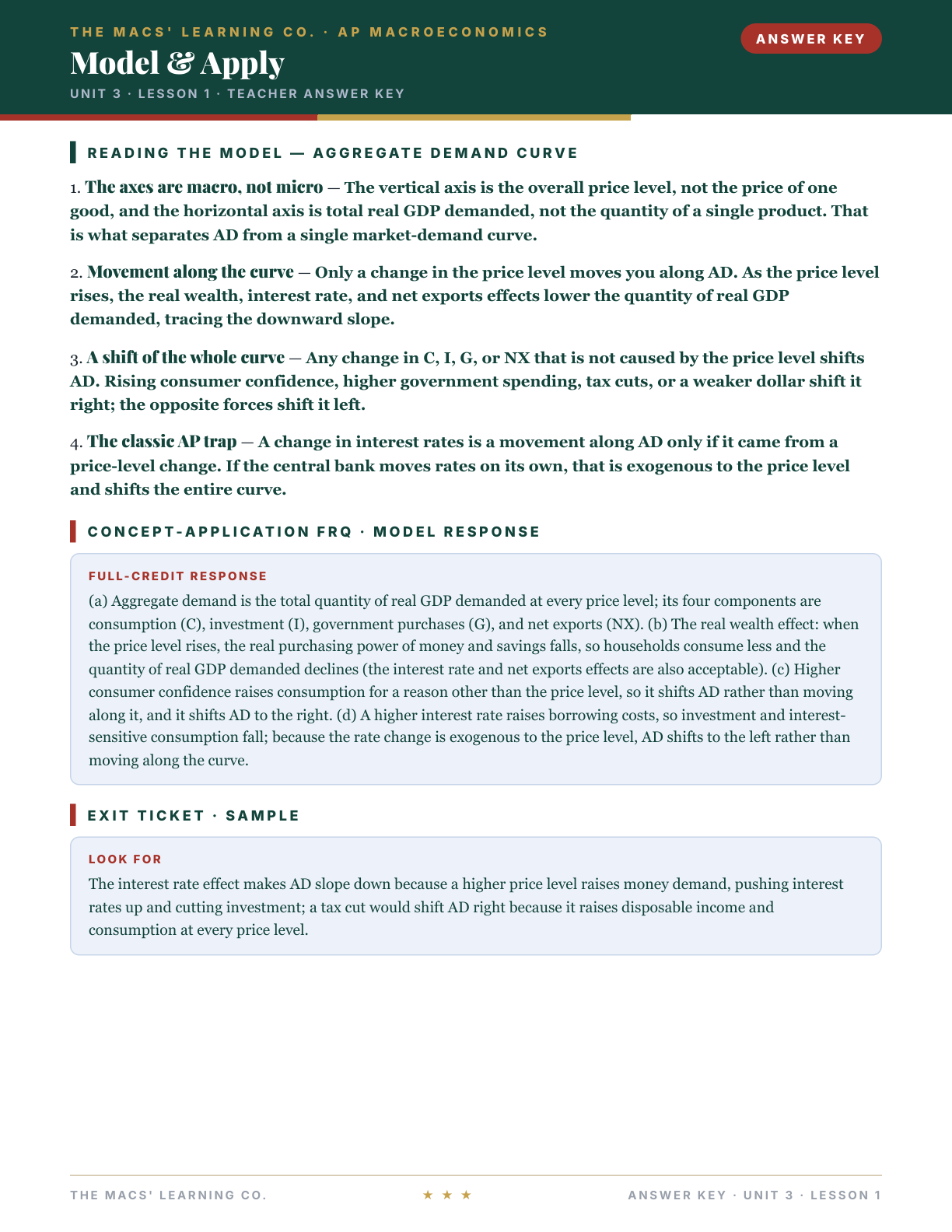
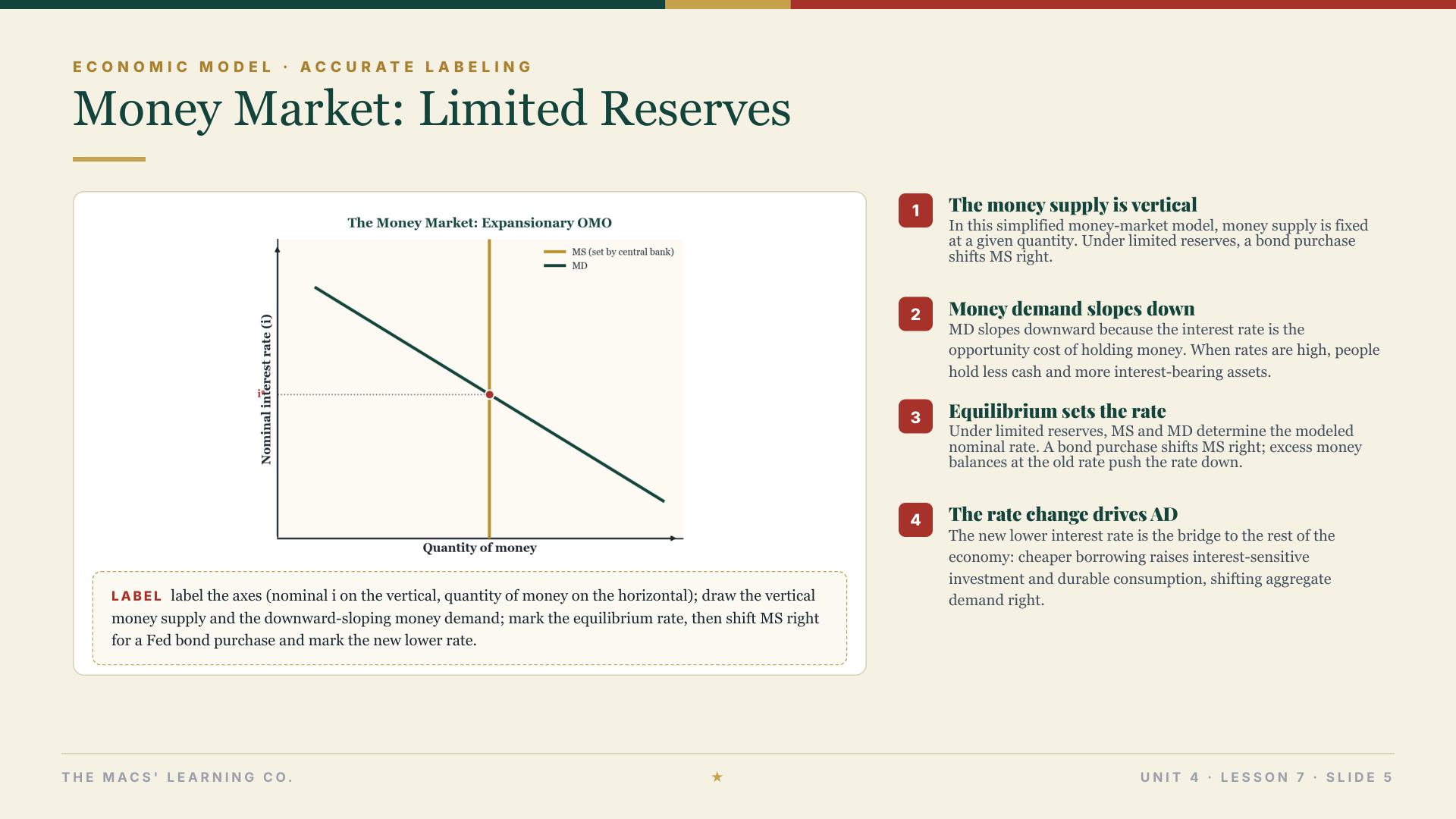
- A PDF slide deck, student handout, answer key and lesson plan, plus a PowerPoint deck. Project the PDF slides or adapt the PPTX in compatible presentation software; use the handout and key for the same lesson.
- Course guides and practice exams
- Each course also includes a Start Here guide, a practice-exam PDF and a separate answer-key PDF. The guides explain the file names and list the lesson sequence.
- Two ZIP downloads
- Microeconomics and Macroeconomics arrive as separate course archives in your resource library after purchase. Extract the ZIP files before opening the materials.
Start with the lesson you need next.
- Open the course’s Start Here guide, choose a lesson and find its lesson ID in the file names.
- Read the matching plan, then review the slide deck and student handout. Choose the pages and tasks that fit your class.
- Open the answer key alongside the selected work. Check the slides in your presentation software before teaching.
For a closer look at planning and responding to misconceptions, use the free Micro Unit 3 teaching guide and cost-curves worksheet with a worked answer.
Check the fit for your setup.
You will need a PDF reader and an app that opens PPTX files to edit slides. PDF pages have a fixed layout. Some graphs and other embedded images may not be individually editable, and fonts or layouts can change between presentation apps. Google Slides import and every app or device version have not been verified.
Review the original sample pages below and allow time to select tasks, prepare handouts and check the presentation on your equipment. Pacing depends on your students and class length.
Look inside
A sample from the resource.
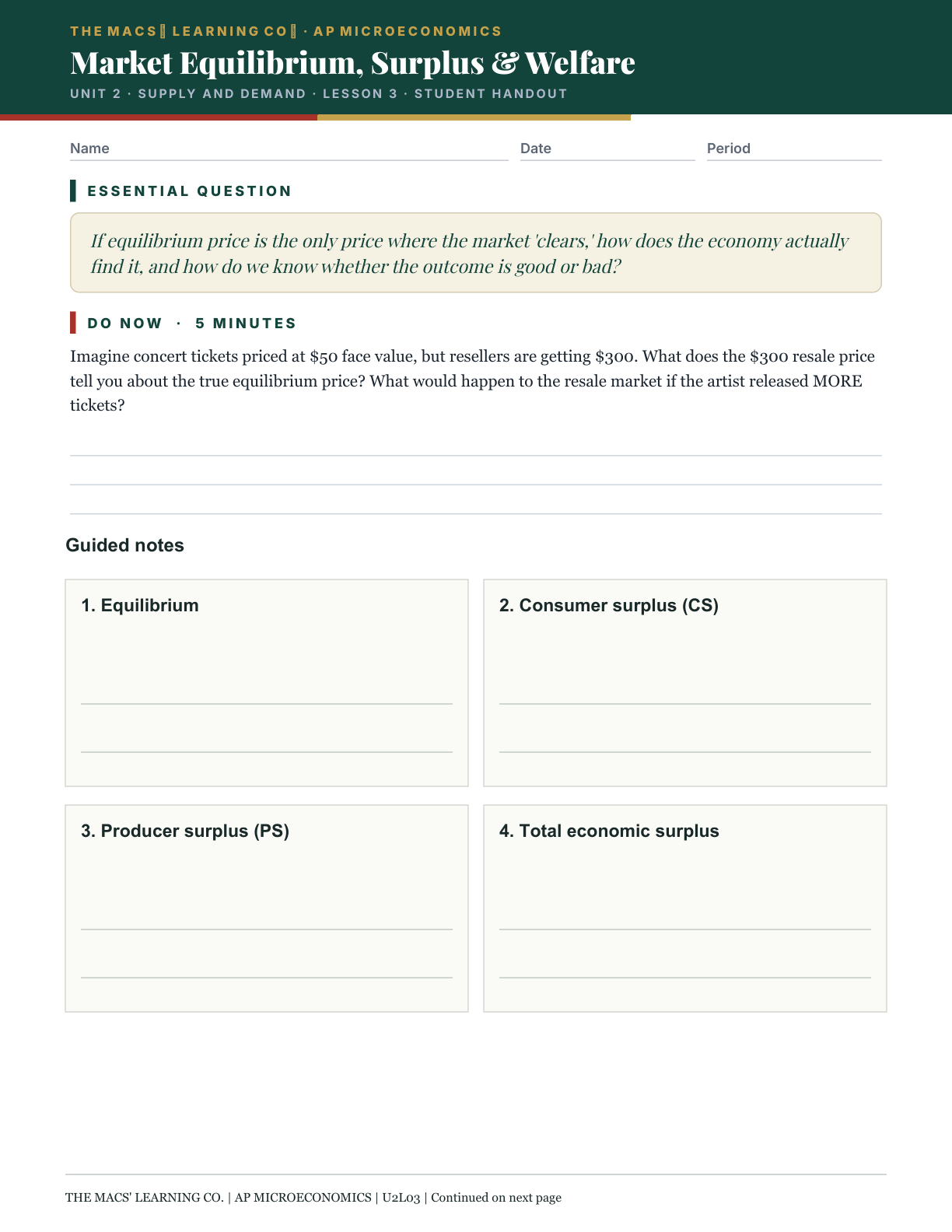
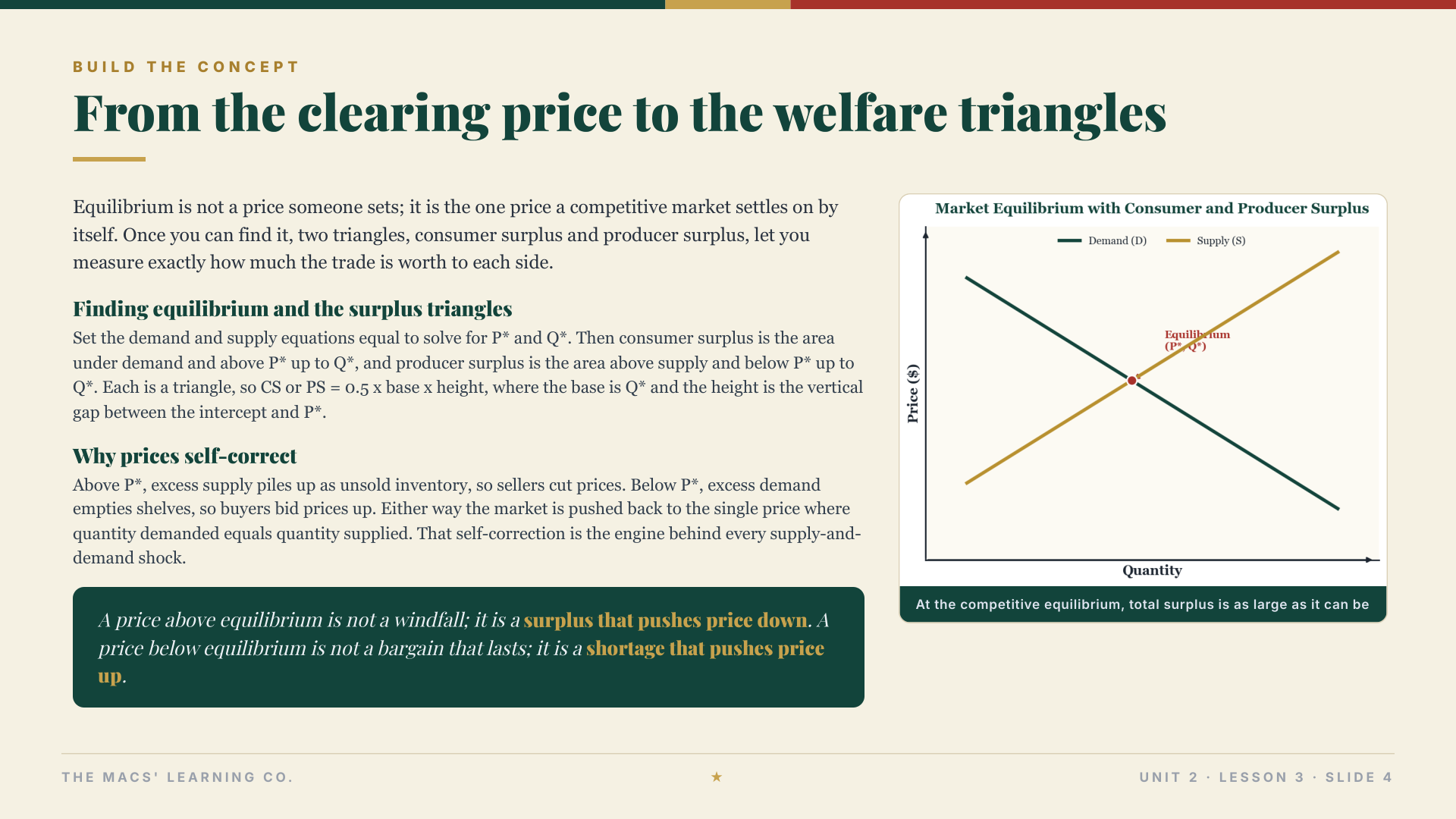
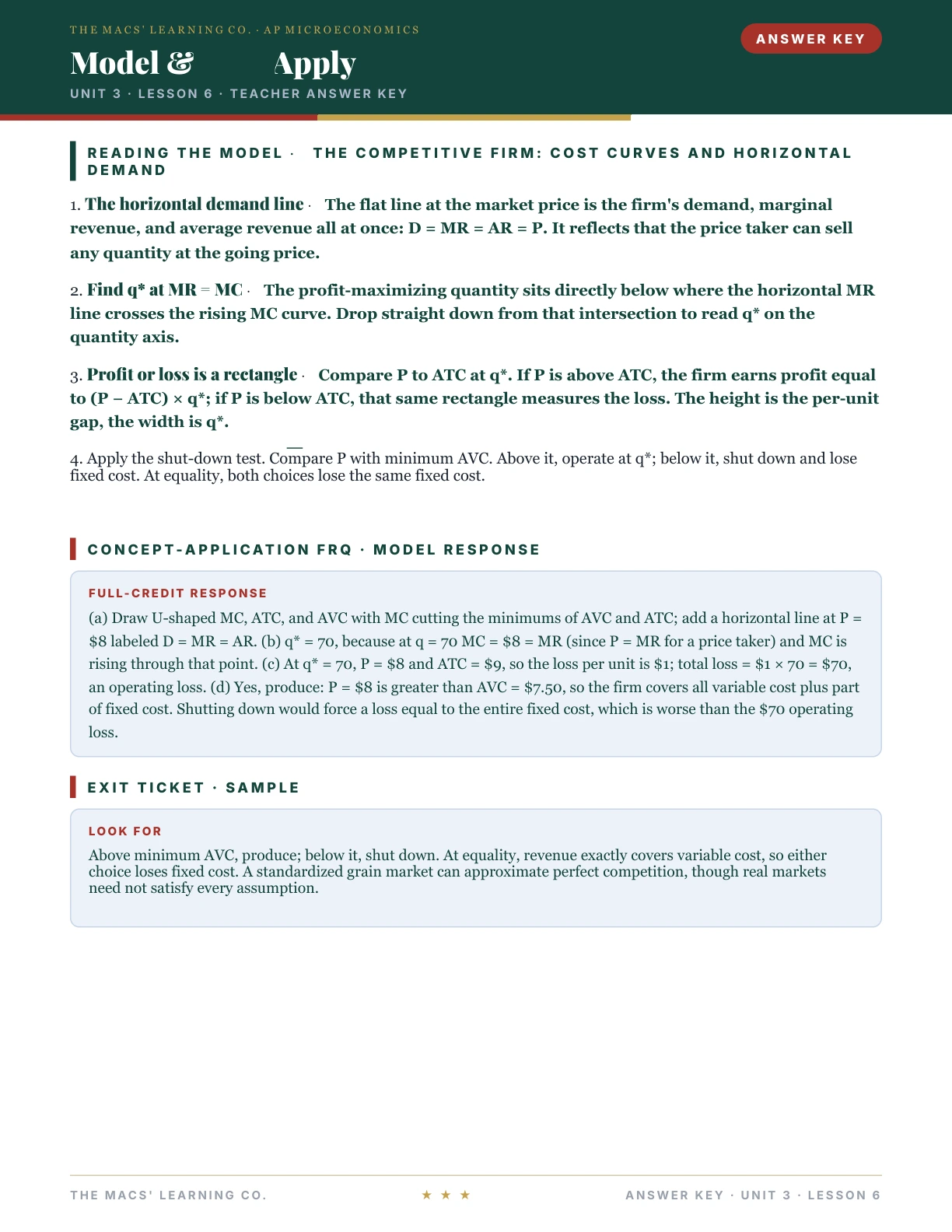
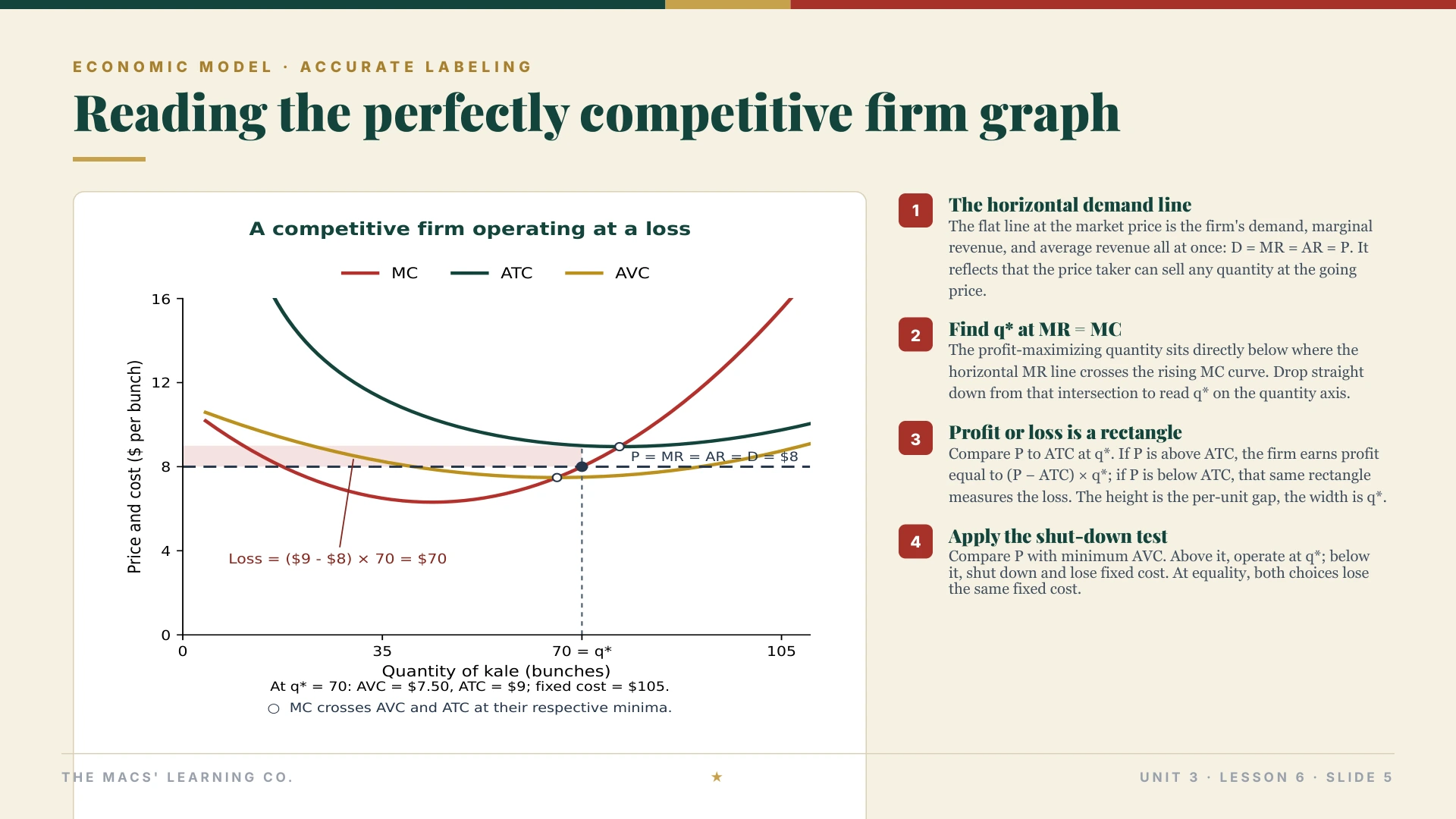
Selected original pages from this resource. These examples do not show every lesson or the complete resource.
Includes worked answers.
View selected original pages 8 images
Selected original pages from this resource. These examples do not show every lesson or the complete resource.
Choose the Economics bundle
AP Microeconomics and AP Macroeconomics in one purchase. Review the included files and samples above before choosing.
From the AP Macroeconomics student handout and matching teacher key
A 5% raise. Did the worker gain buying power?
In the fictional country of Calderon, the Consumer Price Index rises from 250 to 262.5. A worker’s annual pay rises from $60,000 to $63,000. Calculate the inflation rate. After accounting for prices, what happened to the worker’s pay?
Show the teacher’s reasoning
Inflation is (262.5 − 250) ÷ 250 × 100 = 5%. The $3,000 raise is also 5% of the original salary. Wages and prices rose at the same rate, so the worker’s buying power stayed the same.
Quick check: $60,000 ÷ 250 × 100 and $63,000 ÷ 262.5 × 100 both equal $24,000 in base-year dollars.
Adapted from AP Macroeconomics, Unit 2 Lesson 3, “Price Indices & Inflation,” student handout and answer key, page 3 of each. The full question also asks who benefits from unexpected inflation and about a limitation of the CPI.
Try a lesson task
A free cost-curves worksheet
Should a competitive firm keep producing when it makes a loss? Use the one-page student practice and worked answer to try the decision.
Open the free worksheet and answer